
Storks
Find Your Flock
- Directors
- Nicholas Stoller, Doug Sweetland
- Starring
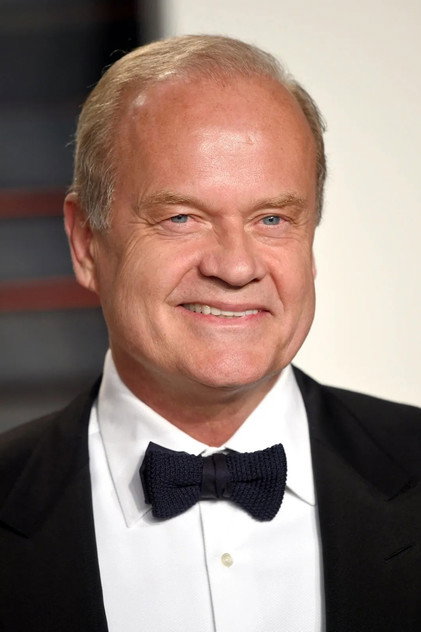
- Andy Samberg, Katie Crown, Kelsey Grammer, Jennifer Aniston
Storks deliver babies…or at least they used to. Now they deliver packages for a global internet retail giant. Junior, the company’s top delivery stork, is about to be promoted when he accidentally activates the Baby Making Machine, producing an adorable and wholly unauthorized baby girl...
Where to watch
Where can I watch Storks?
As of October 24, 2026, MovieCove lists Storks to rent or buy on Apple TV and Prime Video, and on no subscription service.


Your rating, lists and review
Highlights
What stands out about Storks?
Storks earns 8 badges, led by Star-studded and Family friendly.
- Star-studded, Cast badge.4 of the billed cast already had a top-10% actor's standing
- Family friendly, Content badge.In the lightest quarter of films on all 5 categories
- Crowd Pleaser, Reception badge.64% rated it 7 or higher
- Box Office Hit, Awards and box office badge.Returned 2.6× its budget
- Award Winner, Awards and box office badge.4 wins and 4 more nominations
- Feel-good, Craft and mood badge.Leaves you feeling good
- Preferred by Non-US Viewers, Reception badge.Non-US viewers scored it 10 points higher than US viewers
- Big Budget, Awards and box office badge.$70M budget
- Reception
- Craft and mood
- Awards and box office
- Content
- Cast
Reception
Is Storks worth watching?
Storks' Midcredits score is the 67th percentile of all films, from 248K ratings across 6 sources. 64% liked it (rated it 7 or higher out of 10).
Midcredits score
67th percentile
Better received than 67% of films
64 /100
60th percentile of all films
Critics 56 · Audience 65
Rating distribution
votes at each rating level (1–10)
A broad spread centered near 6.9 — solid but not unanimous.
64% liked it
71st percentile of all films
Critics 65% · Audience 62%
Awards
0 Oscars won · 0 Oscar noms · 4 wins / 4 noms overall
98th percentile
248K ratings across platforms
Box office
Returned 2.6× its budget — 90th percentile earner in its genre.
What reviewers say
Common ground
Storks is a fast-paced, high-energy comedy with thin plotting and broad slapstick, where the relentless speed is either a feature or a flaw depending on the viewer.
Fans praised
- relentless rapid-fire humor with clever sight gags and slapstick
- wolf pack transformations as endlessly inventive and hilarious set pieces
- strong emotional payoff in final act, especially baby delivery montage and Tulip's reunion
Detractors panned
- thin, predictable plot held together by tired clichés and forced pacing
- Tulip characterized as grating, illogical, and exhausting rather than endearing
- overstuffed, hyperactive comedy that feels desperate and rarely lands
What stands out
Andy Samberg and Katie Crown bring energetic, natural chemistry; Kelsey Grammer's voice works well; some find pigeon too over-the-top
final act baby montage and Tulip's reunion widely praised as moving; earlier parts lack emotional depth for many
central appeal: mix of slapstick, wordplay, absurdism; divisive—fans find it riotous, detractors forced and unfunny
Tulip endearing to fans as energetic heart; detractors find her stupid and annoying; wolf pack widely loved; pigeon Toady divisive
rapid-fire banter between Junior and Tulip praised as witty; detractors see forced, unfunny lines and repetitive jokes
fresh premise of storks running an Amazon-like delivery; execution seen as derivative of many earlier animated buddy road-trip films
relentlessly fast, some call it exhilarating, others exhausting and hyperactive without breathing room
predictable A-to-B road trip with heavy use of formulaic tropes; fans deem it simple but sufficient, detractors call it illogical and hollow
Preferred by
US vs non-US
Non-US viewers scored it 10 points higher than US viewers.
No notable difference between the other groups: each pair ranks it within 10 percentile points.
- Women vs men 3 points apart
- Under-30s vs over-30s 4 points apart
- Critics vs users even
Watch experience
What is Storks like to watch?
Watch this when you want something light that makes you laugh and does not take itself seriously.
What it asks of you
Very little.
What it feels like
Easy laugh.
How it leaves you
Feeling good.
Story archetype
Every story archetype, clockwise from the top
- Monster 21%: Predator 6% · Tyrant 6% · Invasion 2% · Oppressive state 2% · Corporate villainy 1% · Institutional injustice 1% · Class system under 1% · Technology turns under 1% · Inner demon 1%
- Rags 3%: Underdog triumph 2% · Social ascent under 1% · Fame and fortune under 1% · Rise and fall under 1% · Hidden worth revealed under 1%
- Quest 10% (this title): Treasure hunt 1% · Rescue 4% · Mission 5% (this title) · Journey home under 1% · Pilgrimage 1%
- Voyage 4%: Portal fantasy under 1% · Fish out of water 2% · Survival ordeal 1% · Time displacement under 1% · Descent 1%
- Comedy 11%: Romantic comedy 4% · Comedy of errors 3% · Farce 2% · Buddy comedy 1% · Comedy of manners 1%
- Tragedy 9%: Hubris 1% · Obsession 2% · Corruption arc 2% · Doomed love 2% · Crushed by fate 3%
- Rebirth 13%: Redemption 3% · Healing 5% · Liberation 2% · Second chance 2%
- Mystery 7%: Puzzle 1% · Investigation 5% · Enigma 2%
- No archetype 22%
What it's about
Every theme, clockwise from the top
- Bonds 27% (this title): Romantic love 15% · Marriage 2% · Family bonds 21% (this title) · Parenthood 2% · Friendship 9% · Loyalty 4%
- Self 22%: Identity 14% · Coming of age 5% · Aging under 1% · Self-worth 7% · Ambition 7% · Purpose 9% (this title) · Memory 3% · Obsession 3%
- Power 7%: Power 2% · Corruption 3% · Greed 3% · Class 3% · Oppression 4% · Freedom 5%
- Morality 16%: Justice 13% · Duty 2% · Revenge 4% · Guilt 3% · Redemption 6% · Forgiveness 1% · Sacrifice 4% · Betrayal 5% · Deception 9%
- Survival 15%: Survival 17% · War 1% · Violence 4% · Mortality 2% · Grief 6% · Trauma 7% · Mental illness 1% · Addiction 1% · Illness and disability under 1%
- Society 9%: Community 14% (this title) · Isolation 5% · Prejudice 3% · Displacement 1% · Faith 3% · Tradition vs change 2% · Fame 3% · Legacy 4%
- Ideas 5%: Fate 1% · Free will under 1% · Truth 4% · Hope 5% · Nature 2% · Art 4% · Technology 1%
The world
Content guide
Is Storks okay for kids?
PGStorks is rated PG: “Rated PG for mild action and some thematic elements” (MPAA). As of October 3, 2026, Midcredits content scores put its violence at mild (28/100), sexual content at minimal (14/100), language at minimal (8/100), drug and alcohol content at minimal (0/100) and frightening material at mild (29/100). Overall it is heavier than 11% of PG-rated films.
Ratings in 23 other countriesRatings elsewhere
- UKU
- AustraliaG
- Germany0
- FranceU
- IrelandG
- JapanG
- BrazilL
- AustriaAA
- CzechiaU
- Denmark7
- FinlandK-7
- GreeceΚ
- Hungary12
- ItalyT
- LTV
- Netherlands6
- Poland12
- PortugalM/3
- ROAP
- Russia6+
- SKU
- SpainAPTA
- Sweden7
Point along a line to see a well-known title at that level.
Nothing here is extreme. The strongest element is frightening material, heavier than 32% of PG-rated films.
Source: Midcredits content scores, 0 (none) to 100 (severe) per category, with each standing ranked against other films that have them.
What content warnings does Storks have?
Not screened for content warnings yet.
Cast and crew
Who is in Storks?
Cast
4 of the cast already had the standing of a top-10% working actor.




Crew
Directed by
Written by
Cinematography
Edited by
Music by
Produced by
More like this
What are movies like Storks?
Movies like Storks include The Boss Baby: Family Business (2021), Dora and the Lost City of Gold (2019) and The Boss Baby (2017). Of the 12 closest matches, most are family adventures, and most are films that feel playful.
- The Boss Baby: Family BusinessSubject:
- Dora and the Lost City of GoldFeel:
- The Boss BabySubject:
- Rugrats in ParisSubject:
- Father of the Bride Part IISubject:
- Hotel Transylvania 4: TransformaniaFeel:
- Captain Underpants: The First Epic MovieCharacters:
- Gulliver's TravelsWorld:
- HopStory type:
- Ice Age: The MeltdownStory type:
- OnwardStory type:
- Yes ManWorld:


Why this pick
Explore by
What else shares a premise, people or place with Storks?
1.8K other films share the rarest tag below, follows: adventurer. Each tag opens Browse with the films that share it.