
Titanic
Nothing on earth could come between them.
- Director
- James Cameron
- Starring
- Leonardo DiCaprio, Kate Winslet, Billy Zane, Kathy Bates
101-year-old Rose DeWitt Bukater tells the story of her life aboard the Titanic, 84 years later. A young Rose boards the ship with her mother and fiancé. Meanwhile, Jack Dawson and Fabrizio De Rossi win third-class tickets aboard the ship. Rose tells the whole story from Titanic's departure through to its death—on its first and last voyage—on April 15, 1912.
Where to watch
Where can I watch Titanic?
As of October 24, 2026, MovieCove lists Titanic streaming on Paramount+, Pluto TV (free) and Tubi (free) and to rent or buy on Apple TV and Prime Video.


Your rating, lists and review
Highlights
What stands out about Titanic?
Titanic earns 17 badges, led by Stood the test of time and Oscar Winner.
- Stood the test of time, Reception badge.97th percentile Midcredits score, 29 years on
- Oscar Winner, Awards and box office badge.11 Oscars and 3 more nominations
- Top 5% of films, Rank badge.97th percentile Midcredits score
- Universally Loved, Reception badge.84% rated it 7 or higher
- Spectacle, Craft and mood badge.Praised by fans (98) and detractors (90)
- Standout soundtrack, Craft and mood badge.Praised by fans (96) and detractors (80)
- Awards magnet, Awards and box office badge.53 wins and 40 more nominations
- Award-winning performance, Cast badge.Gloria Stuart, Screen Actors Guild Award win
Show 9 moreShow fewer
- Cultural touchstone, Reception badge.Among the most-seen films, 4.9M ratings
- Visual feast, Craft and mood badge.Praised by fans (95) and detractors (80)
- 10× return, Awards and box office badge.Returned 11× its budget
- Word-of-mouth hit, Awards and box office badge.Grossed 23.5× its opening weekend
- Valentine's Day pick, Craft and mood badge.Fits a date night
- Heavy for a PG-13-rated film, Content badge.Heavier than 98% of PG-13-rated films
- Bittersweet, Craft and mood badge.Leaves you bittersweet
- Emotionally heavy, Craft and mood badge.You may need recovery time
- Big Budget, Awards and box office badge.$200M budget
- Rank
- Reception
- Craft and mood
- Awards and box office
- Content
- Cast
Reception
Is Titanic worth watching?
Titanic's Midcredits score is the 97th percentile of all films, from 4.9M ratings across 6 sources. 84% liked it (rated it 7 or higher out of 10).
Midcredits score
97th percentile
Better received than 97% of films
79 /100
96th percentile of all films
Critics 75 · Audience 79
Rating distribution
votes at each rating level (1–10)
Most people land high, with a thin tail of low scores from those it didn't reach.
84% liked it
94th percentile of all films
Critics 88% · Audience 69%
Awards
11 Oscars won · 3 Oscar noms · 53 wins / 40 noms overall
- WonAcademy Awards· Best Art Direction-Set Decoration
- WonAcademy Awards· Best Cinematography
99th percentile
4.9M ratings across platforms
Box office
Returned 11.3× its budget — 99th percentile earner in its genre.
What reviewers say
Common ground
Both camps agree the film is a technical and visual marvel, but differ on whether its sentimentality and character depth are strengths or weaknesses.
Fans praised
- pioneering VFX that still hold up
- undeniable chemistry between DiCaprio and Winslet
- majestic Horner score
Detractors panned
- cheesy, overwrought romance
- hollow characters and stiff dialogue
- exploitative use of a real tragedy
What stands out
Groundbreaking practical and digital effects; the sinking is a technical landmark.
Horner's score and Celine Dion's theme are iconic and beloved.
Gorgeous visuals and immersive production design universally praised.
Immense historical detail creates a haunting, opulent world.
DiCaprio and Winslet's natural chemistry widely praised; detractors call it wooden.
Fans report being moved to tears; detractors feel emotionally manipulated.
Strong build-up to the sinking, but predictable romance and historical inaccuracies.
Jack and Rose seen as iconic by fans; critics label them underdeveloped archetypes.
Preferred by
No notable difference between any of the groups: each pair ranks it within 10 percentile points.
- Women vs men 3 points apart
- Under-30s vs over-30s 5 points apart
- Critics vs users 3 points apart
- US vs non-US 3 points apart
Watch experience
What is Titanic like to watch?
Watch this when you are ready for heavy feelings, and you want a story that moves you and leaves an ache.
What it asks of you
Room for heavy feelings and patience.
What it feels like
Moving and bittersweet.
How it leaves you
Bittersweet.
Story archetype
Every story archetype, clockwise from the top
- Monster 21%: Predator 6% · Tyrant 6% · Invasion 2% · Oppressive state 2% · Corporate villainy 1% · Institutional injustice 1% · Class system under 1% · Technology turns under 1% · Inner demon 1%
- Rags 3%: Underdog triumph 2% · Social ascent under 1% · Fame and fortune under 1% · Rise and fall under 1% · Hidden worth revealed under 1%
- Quest 10%: Treasure hunt 1% · Rescue 4% · Mission 5% · Journey home under 1% · Pilgrimage 1%
- Voyage 4%: Portal fantasy under 1% · Fish out of water 2% · Survival ordeal 1% · Time displacement under 1% · Descent 1%
- Comedy 11%: Romantic comedy 4% · Comedy of errors 3% · Farce 2% · Buddy comedy 1% · Comedy of manners 1%
- Tragedy 9% (this title): Hubris 1% · Obsession 2% · Corruption arc 2% · Doomed love 2% (this title) · Crushed by fate 3%
- Rebirth 13%: Redemption 3% · Healing 5% · Liberation 2% · Second chance 2%
- Mystery 7%: Puzzle 1% · Investigation 5% · Enigma 2%
- No archetype 22%
What it's about
Every theme, clockwise from the top
- Bonds 27% (this title): Romantic love 15% (this title) · Marriage 2% · Family bonds 21% · Parenthood 2% · Friendship 9% · Loyalty 4%
- Self 22%: Identity 14% · Coming of age 5% · Aging under 1% · Self-worth 7% · Ambition 7% · Purpose 9% · Memory 3% · Obsession 3%
- Power 7%: Power 2% · Corruption 3% · Greed 3% · Class 3% (this title) · Oppression 4% · Freedom 5%
- Morality 16%: Justice 13% · Duty 2% · Revenge 4% · Guilt 3% · Redemption 6% · Forgiveness 1% · Sacrifice 4% · Betrayal 5% · Deception 9%
- Survival 15%: Survival 17% · War 1% · Violence 4% · Mortality 2% · Grief 6% · Trauma 7% · Mental illness 1% · Addiction 1% · Illness and disability under 1%
- Society 9%: Community 14% · Isolation 5% · Prejudice 3% · Displacement 1% · Faith 3% · Tradition vs change 2% · Fame 3% · Legacy 4%
- Ideas 5%: Fate 1% (this title) · Free will under 1% · Truth 4% · Hope 5% · Nature 2% · Art 4% · Technology 1%
The world
Content guide
Is Titanic okay for kids?
PG-13Titanic is rated PG-13: “Rated PG-13 for disaster related peril and violence, nudity, sensuality and brief language” (MPAA). As of October 5, 2026, Midcredits content scores put its violence at moderate (60/100), sexual content at intense (69/100), language at moderate (58/100), drug and alcohol content at moderate (39/100) and frightening material at severe (84/100). Overall it is heavier than 98% of PG-13-rated films.
Ratings in 36 other countriesRatings elsewhere
- UK12A
- CanadaPG
- AustraliaM
- Germany12
- France12
- Ireland12A
- New ZealandPG
- JapanG
- South Korea15
- Brazil12
- Argentina+13
- Belgium16
- CzechiaU
- Denmark11
- FinlandS
- GreeceK12
- Hong KongIIA
- Hungary12
- Israel16
- ItalyT
- MexicoA
- MOB
- Netherlands12
- Norway15
- PhilippinesPG
- Poland12
- PortugalM/12
- PRPG-13
- RO12
- Russia12+
- SingaporeNC16
- South Africa13
- Spain16
- Sweden11
- Switzerland12
- Türkiye10+
Point along a line to see a well-known title at that level.
The reason to think twice is frightening material and sexual content.
Source: Midcredits content scores, 0 (none) to 100 (severe) per category, with each standing ranked against other films that have them.
What content warnings does Titanic have?
MovieCove's classifier found 7 depicted content warnings in Titanic: Domestic violence (moderate), Kidnapping or confinement (moderate), plus 5 withheld here because they would spoil the plot. Each is backed by a verbatim quote from the parents' guide notes; a missing warning is not a guarantee of absence.
Cast and crew
Who is in Titanic?
Cast
Gloria Stuart won the SAG for this film.





Crew
Directed by
Written by
Cinematography
Music by
Produced by
More like this
What are movies like Titanic?
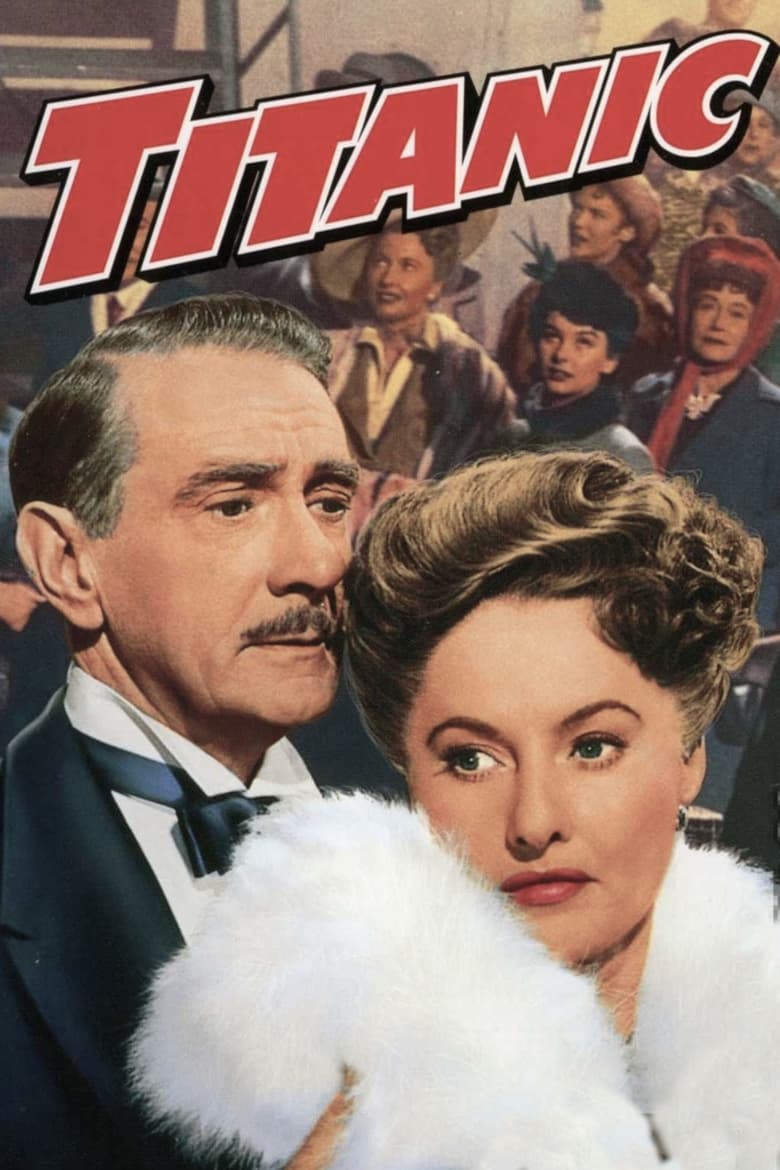
Movies like Titanic include Romeo + Juliet (1996), A Night to Remember (1958) and Titanic (1953). Of the 12 closest matches, several are films set at sea, and several are disaster survival stories.
- Romeo + JulietCharacters:
- A Night to RememberWorld:
- TitanicWorld:
- That Hamilton WomanCharacters:
- The English PatientStory type:
- Coco Chanel & Igor StravinskyWorld:
- White SquallStory type:
- The NotebookWorld:
- Radhe ShyamReception:
- Ryan's DaughterStory type:
- Moulin Rouge!Reception:
- Autumn in New YorkCharacters:




Why this pick
Explore by
What else shares a premise, people or place with Titanic?
545 other films share the rarest tag below, kind of film: disaster survival. Each tag opens Browse with the films that share it.