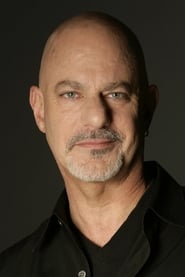
Berry Gordy III (born November 28, 1929), known professionally as Berry Gordy Jr., is an American retired record executive, record producer, songwriter, film producer and television producer. He is best known as the founder of the Motown record label and its subsidiaries, which was the highest-earning African-American business for decades. As a songwriter, Gordy composed or co-composed a number of hits including "Lonely Teardrops" and "That's Why" (Jackie Wilson), "Shop Around" (the Miracles), and "Do You Love Me" (the Contours), all of which topped the US R&B charts, as well as the international hit "Reet Petite" (Jackie Wilson). As part of the Corporation, he wrote many hit songs for the Jackson 5, including "I Want You Back" and "ABC". As a record producer, he launched the Miracles and signed acts like the Supremes, Marvin Gaye, the Temptations, the Four Tops, Gladys Knight & the Pips, and Stevie Wonder. He was known for carefully directing the public image, dress, manners, and choreography of his acts. Gordy was inducted into the Rock and Roll Hall of Fame in 1988, awarded the National Medal of Arts by President Barack Obama in 2016, and the Kennedy Center Honors in 2021. In 2022, he was inducted into the Black Music & Entertainment Walk of Fame. Berry Gordy III (also known as Berry Gordy Jr.) was the seventh of eight children (Fuller, Esther, Anna, Loucye, George, Gwen, Berry and Robert), born on November 28, 1929, in Detroit, to middle-class parents, Berry Gordy II (also known as Berry Gordy Sr.) and Bertha Fuller Gordy, who had relocated to Detroit from Oconee, Washington County, Georgia, in 1922. His grandfather, named Berry Gordy I, was the son of James Gordy, a white plantation owner in Georgia, and one of his slaves. Berry I's half-brother, James (son of the elder James and his legal wife), was the grandfather of President Jimmy Carter. Berry Gordy II was led to Detroit both by the job opportunities offered by the booming automotive businesses, and also by worries over the atmosphere in the American South where black men were lynched "with chilling regularity by the Ku Klux Klan"; in the first twenty years of the twentieth century, 1,502 lynchings were reported, most in Southern states. Gordy's father opened a grocery store, owned a plastering and carpentry business, and a printing shop. While his brothers Fuller and George were happy to work at jobs their father assigned to them in construction and printing, Berry and Robert, the younger boys, were less inclined to follow that path. Both Robert and Berry liked dancing and music, but Berry's greatest interest was in boxing. Gordy dropped out of Northeastern High School in the eleventh grade to become a professional boxer in hopes of becoming rich quickly; he boxed professionally until 1950, when he was drafted by the United States Army in 1951 for service in the Korean War. Arriving in Korea in May 1952, Gordy was first assigned to the 58th Field Artillery Battalion, 3rd Infantry Division, near Panmunjom. He later became a chaplain's assistant, driving a jeep and playing the organ at religious services at the front. His tour in the Korean War was completed in April 1953. He obtained a GED, which is equivalent to a high school diploma. ... Source: Article "Berry Gordy" from Wikipedia in English, licensed under CC-BY-SA 3.0.
Read moreShow less
Biography from TMDB.
- November 28, 1929 (96)
- Detroit, Michigan, USA
- Producer and director, also actor
- 6 on MovieCove · 8 credits in all
Known for

What are Berry Gordy's films like?
Across their 7 MovieCove titles with a thematic analysis, their films lean Self and Society.
Themes
What they feel like to watch
Ironic 0 · Wry 1 · Earnest 6
Light 5 · Serious 1 · Dark 1
A split, not a type: Grounded 4 · Stylized 2 · Heightened 1
Gentle 3 · Charged 3 · Intense 1
Steady 3 · Shifting 3 · Whiplash 1
Straight-faced 3 · Some laughs 3 · Funny 1
A split, not a type: Slow burn 4 · Even-paced 3 · Relentless 0
Casual 4 · Engaged 3 · Full focus 0
Easy watch 4 · Affecting 2 · Heavy 1
Resolved 6 · Open-ended 1 · Ambiguous 0
Moods and endings
- Happy2
- Bittersweet4
- Tragic1
AI-generated from each title's plot synopsis and cast list, with extra plot summaries, reviews and Parents Guide notes for titles the model may not know, and the model's own knowledge of the ones it recognizes. Only analyzed titles count, so this covers part of the filmography; the feel axes count films only for now.
Where can I watch Berry Gordy's films?
As of October 24, 2026, 4 of their 6 MovieCove titles stream on a subscription or free service, most on Tubi (2).


Subscription and free streaming for Berry Gordy's titles on MovieCove; rent and buy are not counted. Titles are listed by Midcredits score, highest first, at most 12 per service; a dashed chip is a producer credit or a minor one, such as a thanks. A service opens the browse page, which counts movies only, so its number can differ.
Filmography
8 credits, 6 with a MovieCove page; 20 appearances as themselves are hidden until asked for.
 Midcredits score: 97th percentile of all films

The Last Dragon(1985)
Midcredits score: 77th percentile of all films
The Wiz(1978)
Midcredits score: 52nd percentile of all films Midcredits score: 73rd percentile of all films

Mahogany(1975)
Midcredits score: 56th percentile of all films
Lady Sings the Blues(1972)
Midcredits score: 79th percentile of all films
The Jackson 5: Goin' Back to Indiana (not in the MovieCove catalog yet)(1971)

Diana! (not in the MovieCove catalog yet)(1971)
Career shape
A full career of 8 titles from 1971 to 2019.
Biggest box office
The Last Dragon (1985)
Highest rated
Hitsville: The Making of Motown (2019)
Most popular right now
The Last Dragon (1985)
Counts from TMDB across their full career, self appearances out; a title counts in every role they held on it. The ring is the typical Midcredits score (the median percentile) of the role's titles that are on MovieCove, shown from 5 scored.
How do Berry Gordy's films land?
Their typical MovieCove film has a Midcredits score in the 75th percentile, the median of all 6; across their 7 films with reception data, the typical film sits in the 75th percentile for acclaim.
- 75th and up3
- 50th to 74th3
Shape of the crowd
3 of their 6 titles are Crowd Pleasers.
- Universally Loved1
- Cult Classic1
- Crowd Pleaser3
- Mixed1
Reviewers score the atmosphere 65/100 and the pacing 46/100 in their films, across 7 reviewed titles. The element that speaks to their work as a director.
Percentiles are each film's standing among all films on MovieCove; the typical film is the median, so one outlier cannot drag it. Percentiles and reviewer scores count the films IMDb credits them on, for now; the Midcredits score bands, the shape of the crowd and the two cards count their MovieCove titles, shows included (a show ranked among shows), appearances as themselves left out. A descriptor is the shape of a title's IMDb rating distribution against the catalog; "most divisive" needs a spread wider than half of all titles, and a card names only a principal credit: a craft role, and on a show a crew role or a run of episodes, never a courtesy credit or a one-off guest spot.
Who does Berry Gordy work with?
People who share at least 2 of Berry Gordy's MovieCove titles, grouped by what they did on them; Billy Dee Williams shares the most, 3.
Actors
- Billy Dee WilliamsShared titles: The Bingo Long Traveling All-Stars & Motor Kings (1976), Mahogany (1975), Lady Sings the Blues (1972)See all 3 shared titles with Billy Dee Williams

- Richard PryorShared titles: The Bingo Long Traveling All-Stars & Motor Kings (1976), Lady Sings the Blues (1972)See all 2 shared titles with Richard Pryor
- Diana RossShared titles: Mahogany (1975), Lady Sings the Blues (1972)See all 2 shared titles with Diana Ross

Producers
- Rob CohenShared titles: The Bingo Long Traveling All-Stars & Motor Kings (1976), Mahogany (1975)See all 2 shared titles with Rob Cohen