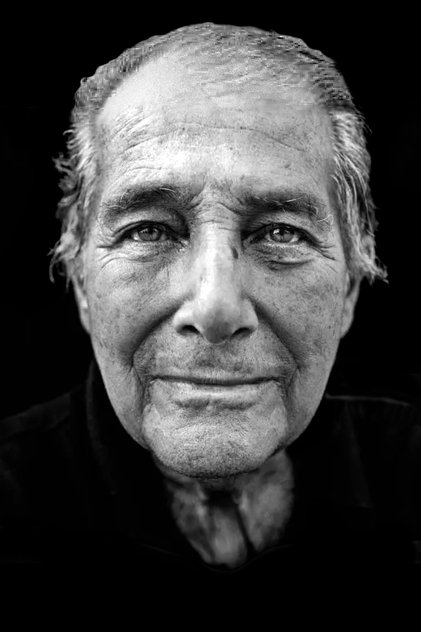
Gillo Pontecorvo, born November 19, 1919 in Pisa and died October 12, 2006 in Rome, is an Italian filmmaker. Of Italian Jewish origin, Gillou Pontecorvo is the brother of Bruno Pontecorvo, a nuclear physicist working for the USSR, and Guido Pontecorvo, an Italian-British geneticist, as well as the grandson of the Jewish industrialist Pellegrino Pontecorvo. He has three sons: Marco (cinematographer and director), Simone (painter) and Ludovico (physicist). A chemist by training, he quickly turned to journalism and became correspondent in Paris for several Italian publications. In 1941, he joined the Italian Communist Party (PCI), and participated in anti-fascist activities in northern Italy. After the Soviet repression of the Budapest uprising in 1956, he broke with the PCI, while continuing to claim Marxism. He started in cinema after the Second World War as assistant to Yves Allégret1 and Mario Monicelli in particular. From 1953, he produced his first documentary essays (Giovanna, MM, 1956). In 1956, he contributed to an episode of Die Windrose, supervised by Alberto Cavalcanti. The following year, he directed his first feature film, A Called Squarcio (La grande strada azzurra, produced by Maleno Malenotti, based on a novel by Franco Solinas). Then he describes the concentration camp world in the film Kapò (1960), the story of a Jewish woman who becomes an auxiliary of the Nazis. The film was nominated for an Oscar for best foreign language film in 1961. It gave rise to a famous controversy over the "Kapò tracking shot", which Jacques Rivette had deemed unworthy in an article in Cahiers du cinéma entitled "De l' abjection.” In 1966, he directed his most important film, The Battle of Algiers (La Battaglia di Algeri), a reconstruction of the police action of the French army during the Battle of Algiers which was a fundamental episode of the war. from Algeria. This film was awarded the Golden Lion at the Venice Festival, but remained banned in France for a long time and its exploitation caused a lot of uproar linked to the scenes of torture committed by the French army. In Queimada (1969), dominated by the interpretation of Marlon Brando, he once again attacks colonialism, with an evocation of the Haitian revolution at the beginning of the 19th century. Faced with the commercial failure of Queimada, Pontecorvo stopped making films. He still directed a secondary film, Operation Ogre (Ogro, 1979), on the assassination of Luis Carrero Blanco by ETA during Francoism, and collaborated on the film L'addio a Enrico Berlinguer (1984). In 1992, he was appointed director of the Venice Film Festival. In 1993, during the 50th edition of the Mostra, Pontecorvo presented Steven Spielberg with an honorary Golden Lion, at the time of the release of Schindler's List. He died on October 12, 2006, at the age of 86, in Rome, Italy.
Read moreShow less
Biography from TMDB.
- November 19, 1919
- October 12, 2006 (aged 86)
- Pisa, Italy
- Director, writer and composer
- 5 on MovieCove · 21 credits in all
What are Gillo Pontecorvo's films like?
Across a limited sample of 3 MovieCove titles with a thematic analysis, their films lean Power and Morality.
Themes
What they feel like to watch
Ironic 0 · Wry 1 · Earnest 2
Light 0 · Serious 0 · Dark 3
Grounded 1 · Stylized 2 · Heightened 0
Gentle 0 · Charged 0 · Intense 3
Steady 1 · Shifting 2 · Whiplash 0
Straight-faced 3 · Some laughs 0 · Funny 0
A split, not a type: Slow burn 2 · Even-paced 1 · Relentless 0
Casual 0 · Engaged 0 · Full focus 3
Easy watch 0 · Affecting 0 · Heavy 3
Resolved 1 · Open-ended 1 · Ambiguous 1
Moods and endings
AI-generated from each title's plot synopsis and cast list, with extra plot summaries, reviews and Parents Guide notes for titles the model may not know, and the model's own knowledge of the ones it recognizes. Only analyzed titles count, so this covers part of the filmography; the feel axes count films only for now.
Where can I watch Gillo Pontecorvo's films?
As of October 24, 2026, 3 of their 5 MovieCove titles stream on a subscription or free service.


Subscription and free streaming for Gillo Pontecorvo's titles on MovieCove; rent and buy are not counted. Titles are listed by Midcredits score, highest first, at most 12 per service; a dashed chip is a producer credit or a minor one, such as a thanks. A service opens the browse page, which counts movies only, so its number can differ.
Filmography
21 credits, 5 with a MovieCove page; 7 appearances as themselves are hidden until asked for.

Franco Cristaldi e il suo cinema Paradiso (not in the MovieCove catalog yet)(2009)

The Spring of 2002 - Italy Protests, Italy Stops (not in the MovieCove catalog yet)(2002)
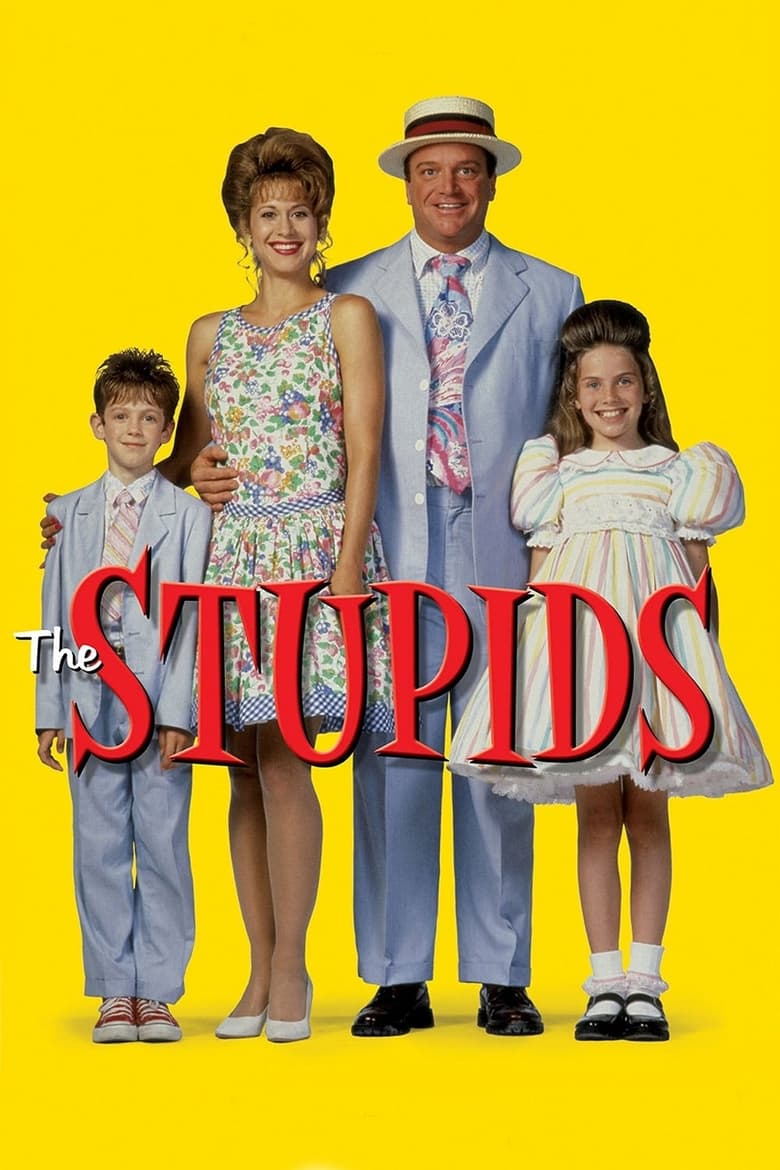
The Stupids(1996)
Midcredits score: 14th percentile of all filmsRome, November 12, 1994 (not in the MovieCove catalog yet)(1995)

Return to Algiers (not in the MovieCove catalog yet)(1992)

12 Directors for 12 Cities (not in the MovieCove catalog yet)(1989)

Farewell to Enrico Berlinguer (not in the MovieCove catalog yet)(1984)

Sabatoventiquattromarzo (not in the MovieCove catalog yet)(1984)

Operation Ogre(1979)
Midcredits score: 85th percentile of all films
Burn!(1969)
Midcredits score: 87th percentile of all films
The Battle of Algiers(1966)
Midcredits score: 98th percentile of all films
Kapo (not in the MovieCove catalog yet)(1960)

The Wide Blue Road (not in the MovieCove catalog yet)(1957)
The Wind Rose (not in the MovieCove catalog yet)(1957)

Toto and Carolina (not in the MovieCove catalog yet)(1955)

Giovanna (not in the MovieCove catalog yet)(1955)
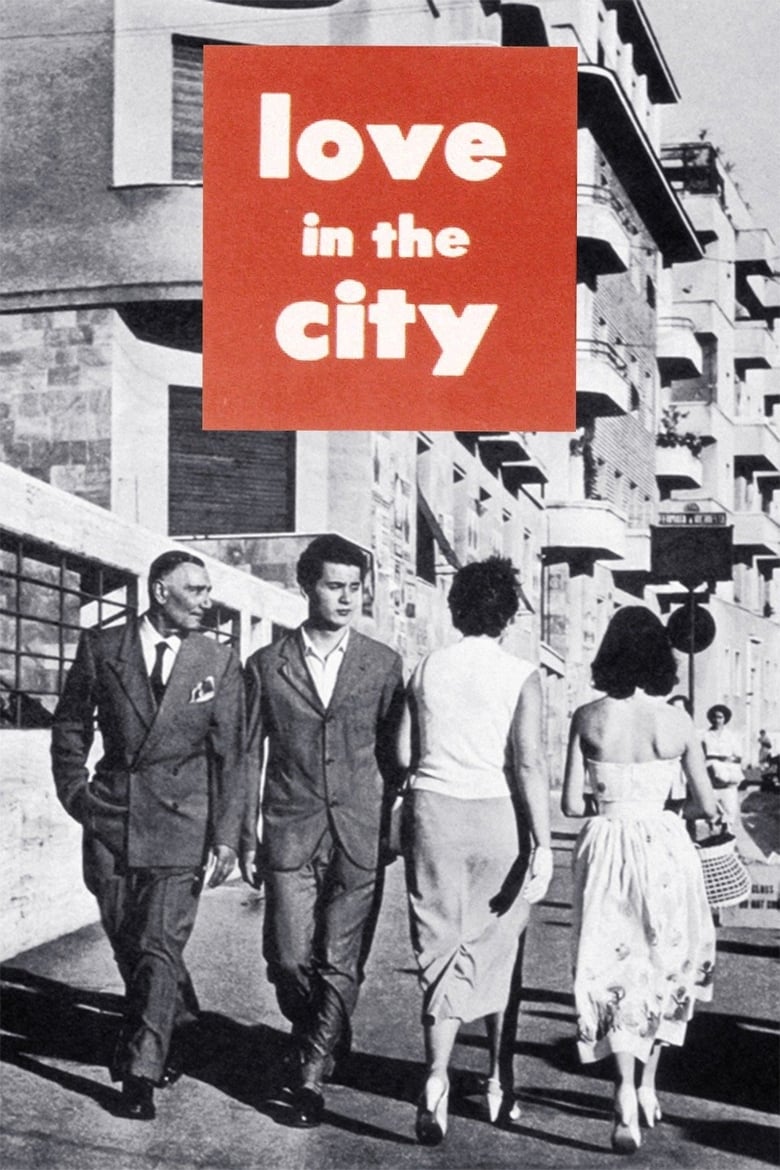
Love in the City(1953)
Midcredits score: 61st percentile of all films
The Unfaithfuls (not in the MovieCove catalog yet)(1953)

L'Homme Que Nous Aimons Le Plus (not in the MovieCove catalog yet)(1949)

Outcry (not in the MovieCove catalog yet)(1946)
Una storia per I 'energia (not in the MovieCove catalog yet)
Career shape
A full career of 21 titles, 20 of them dated from 1946 to 2009.
Film career
- 1996Screen debut· The Stupids
How do Gillo Pontecorvo's films land?
Their typical MovieCove film has a Midcredits score in the 85th percentile, the median of all 5; across a limited sample of 3 films with reception data, the typical film sits in the 85th percentile for acclaim.
- 75th and up3
- 50th to 74th1
- Below 25th1
Shape of the crowd
3 of their 5 titles are Crowd Pleasers.
- Universally Loved1
- Crowd Pleaser3
- Mixed1
Reviewers score the atmosphere 84/100 and the pacing 58/100 in their films, across 3 reviewed titles. The element that speaks to their work as a director.
Percentiles are each film's standing among all films on MovieCove; the typical film is the median, so one outlier cannot drag it. Percentiles and reviewer scores count the films IMDb credits them on, for now; the Midcredits score bands, the shape of the crowd and the two cards count their MovieCove titles, shows included (a show ranked among shows), appearances as themselves left out. A descriptor is the shape of a title's IMDb rating distribution against the catalog; "most divisive" needs a spread wider than half of all titles, and a card names only a principal credit: a craft role, and on a show a crew role or a run of episodes, never a courtesy credit or a one-off guest spot.
Who does Gillo Pontecorvo work with?
People who share at least 2 of Gillo Pontecorvo's MovieCove titles, grouped by what they did on them; Ennio Morricone shares the most, 3.
Writers
- Giorgio ArlorioShared titles: Operation Ogre (1979), Burn! (1969)See all 2 shared titles with Giorgio Arlorio

- Franco SolinasShared titles: Burn! (1969), The Battle of Algiers (1966)See all 2 shared titles with Franco Solinas

Composers, cinematographers and editors
- Ennio MorriconeShared titles: Operation Ogre (1979), Burn! (1969), The Battle of Algiers (1966)See all 3 shared titles with Ennio Morricone
- Marcello GattiShared titles: Operation Ogre (1979), Burn! (1969), The Battle of Algiers (1966)See all 3 shared titles with Marcello Gatti

- Mario MorraShared titles: Operation Ogre (1979), Burn! (1969), The Battle of Algiers (1966)See all 3 shared titles with Mario Morra